
Coffee Drink
Traditional Greek Coffee: Recipe, History & Tips
Discover how to make traditional Greek coffee in a briki with step-by-step instructions, history, cultural tips and personal insights.
On This Page9 Sections
What Is Greek Coffee?
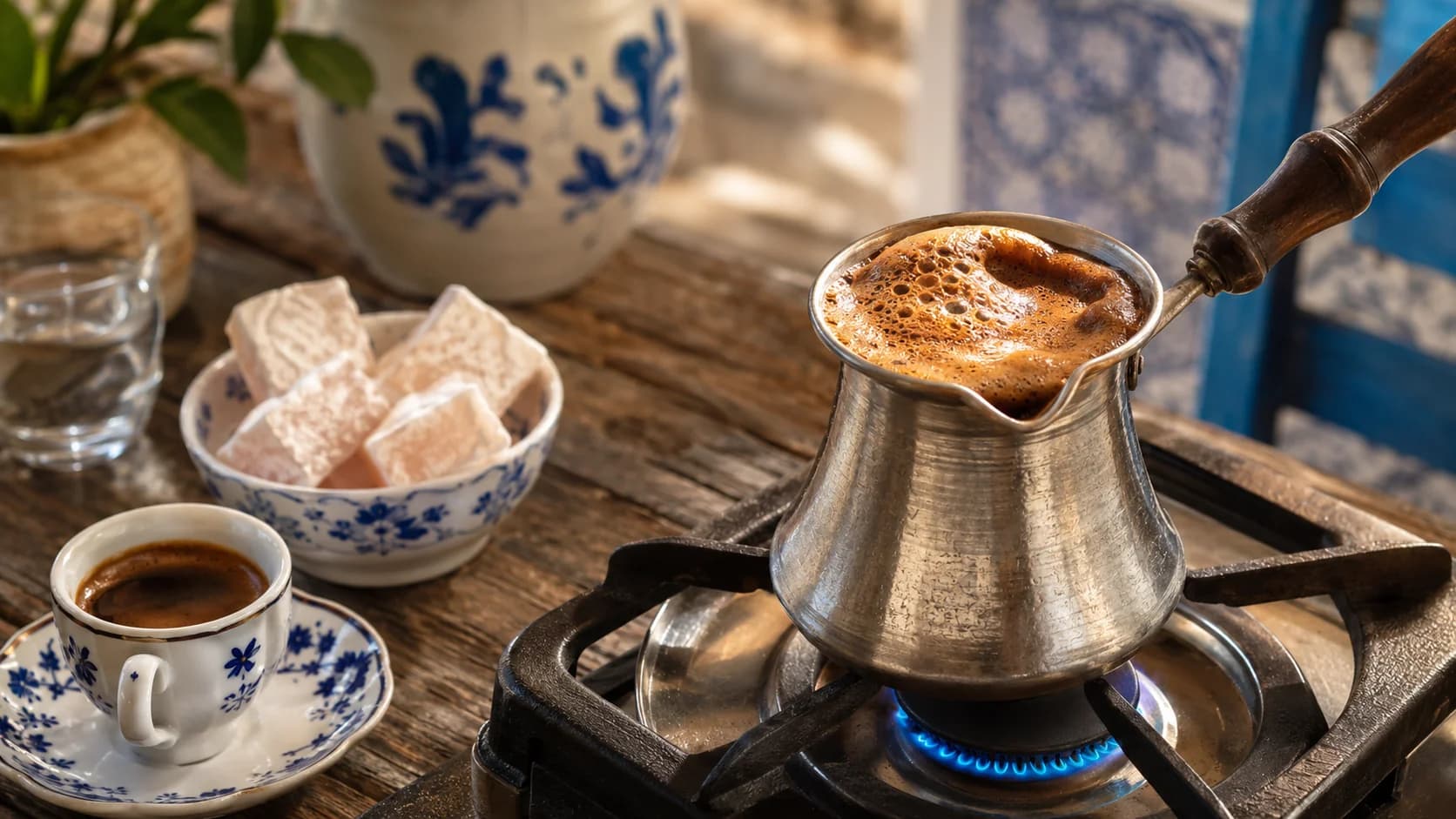
Greek coffee is an unfiltered coffee brewed by simmering finely ground beans with water and sugar in a small pot called a briki. Nearly identical in method to Turkish coffee, it is served grounds-and-all in small cups, strong and thick with a foamy top (kaimaki).
Key Takeaways
- 1Greek coffee is an unfiltered coffee brewed by simmering finely ground beans with water and sugar in a small pot called a briki.
- 2**Ingredients (1 serving)** - 7 g finely ground Greek coffee (similar to Turkish coffee) - 70 ml cold water - Sugar to taste (none for 'sketos', ½ tsp for 'metrios', 1 tsp for 'gly
- 3The practical detail to notice: NAMING POLITICS + TERMS: near-identical method to Turkish (briki pot); the sketos/metrios/glykos sweetness words and the regional naming sensitivity.
Drink Snapshot
- Drink
- Greek Coffee
- Category
- Regional and traditional coffee drinks
- Page role
- Standard Guide
- Page type
- Regional drink guide
Flavor And Tasting Notes
Greek coffee is an unfiltered coffee brewed by simmering finely ground beans with water and sugar in a small pot called a briki. Nearly identical in method to Turkish coffee, it is served grounds-and-all in small cups, strong and thick with a foamy top (kaimaki).
• Light-bodied yet intense; roasty flavor with sweet, caramelized notes when sugar is added. • Thick crema (kaimaki) forms on top; the grounds give a slightly gritty, fudgy finish. • Subtle aromas of nuttiness and toasted grain; using lighter roasts yields bright and grassy notes.
Preparation And Recipe
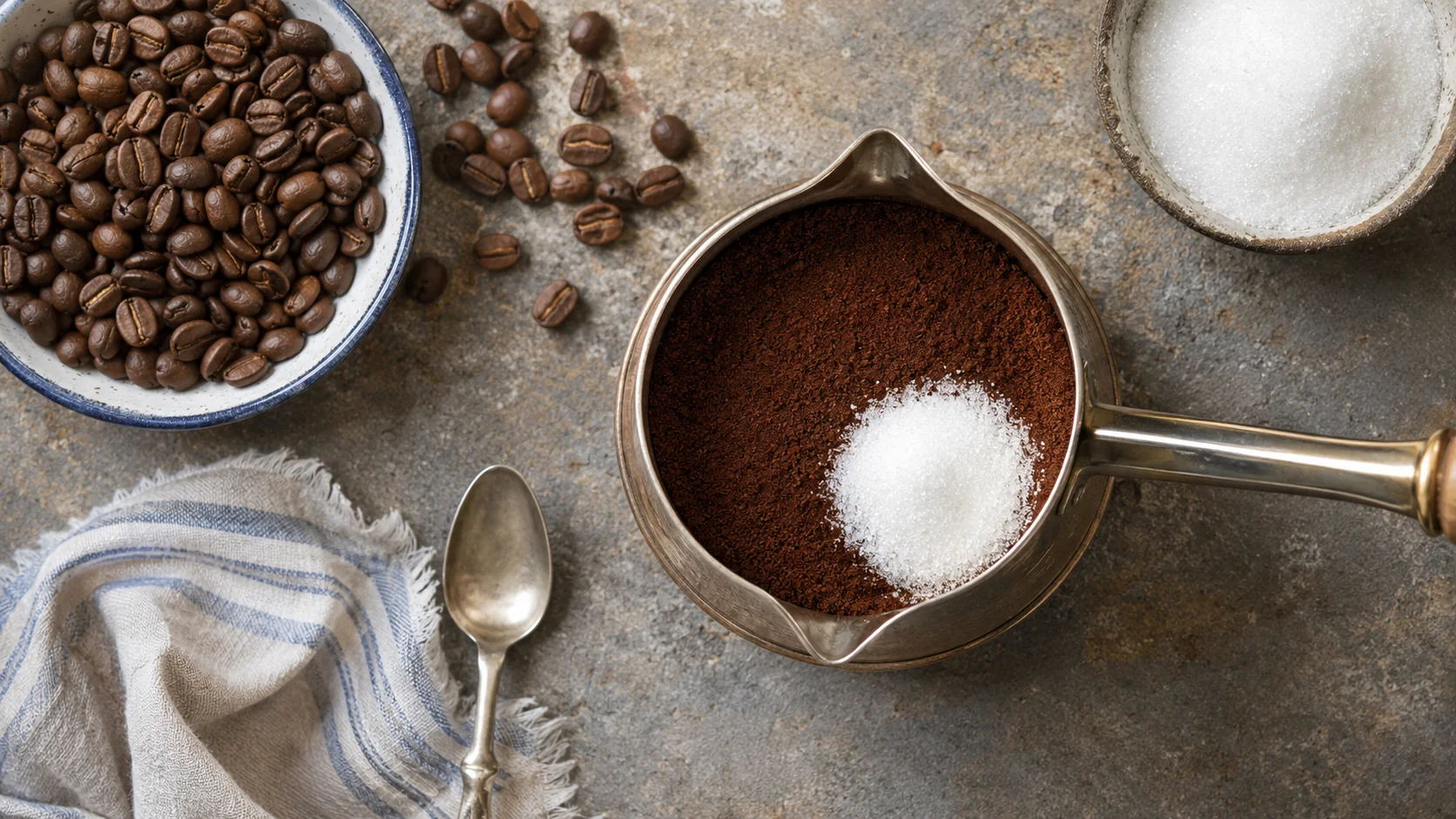
Ingredients (1 serving)
- 7 g finely ground Greek coffee (similar to Turkish coffee)
- 70 ml cold water
- Sugar to taste (none for 'sketos', ½ tsp for 'metrios', 1 tsp for 'glykos')
Method
- Measure water into a small briki (narrow metal pot). Add sugar and stir to dissolve.
- Add finely ground coffee and stir lightly to combine.
- Place briki over medium-low heat. Heat slowly; do not stir once heating begins. Foam (kaimaki) will rise along edges.
- Just before it boils, remove from heat; spoon some foam into a demitasse cup. Return briki to heat and bring foam up again.
- Pour coffee slowly into cup to keep foam intact. Let grounds settle before sipping.
- Serve with a glass of cold water and a sweet like loukoumi or baklava. Do not stir once poured.
Dialing In And Troubleshooting
• Use a briki and super-fine grind; coarser grinds won't produce foam. • Heat slowly; boiling will break the kaimaki and make the coffee bitter. • Adjust sweetness before heating. Traditional categories: sketos (no sugar), metrios (medium), glykos (sweet). • Let the grounds settle; slurping from the surface avoids sediment. • Clean briki between brews; residue can impart bitterness.
History And Culture
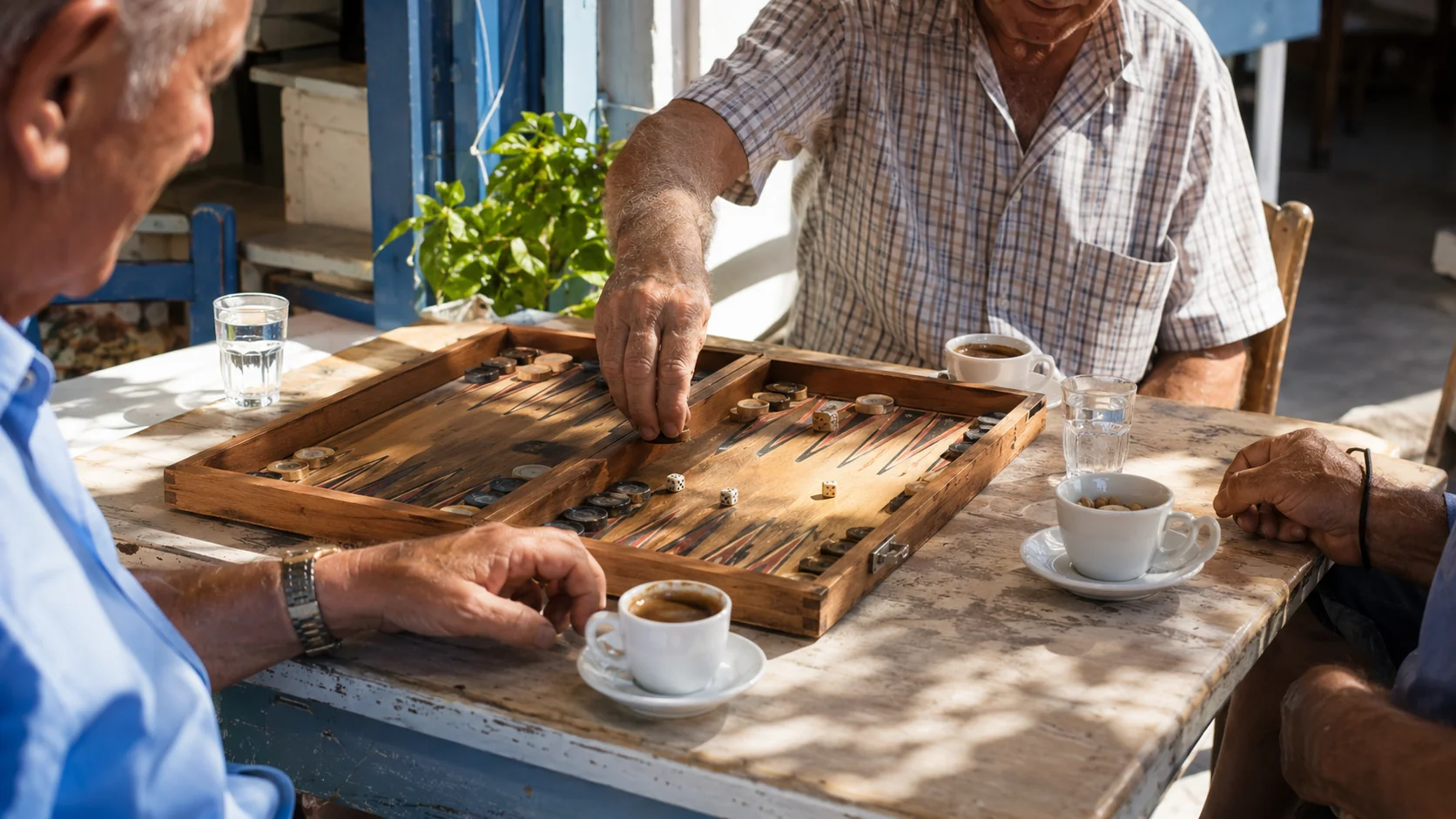
• Greek coffee traces its origins to Yemen and the Ottoman Empire. Finely ground beans were boiled in small pots and served unfiltered. • Until the 1970s the drink was commonly called Turkish coffee; during political tensions the name “Greek coffee” gained popularity. • It is integral to Greek social life. Locals enjoy it slowly in kafeneio (traditional cafés), often accompanied by conversation or games. • The foam (kaimaki) is prized; leaving some kaimaki on the sides of the cup is considered respectful. • Coffee grounds are sometimes used for tasseography (fortune telling).
Editor's Take
Practical Detail
Variations
Order by sweetness: sketos (no sugar), metrios (one sugar), glykos (sweet), vary glykos (very sweet). 'Me gala' adds milk; 'diplos' is a double. The method mirrors Turkish coffee.
Common Questions
What is the difference between Greek coffee and Turkish coffee?
How do you order Greek coffee by sweetness?
Sources And Further Reading
en.wikipedia.org
en.wikipedia.orgReference used for drink identity, preparation, taste, or cultural context.