
Guide
Coffee Ratios Guide
Learn practical coffee-to-water ratios by brew method, how ratios affect strength, and how to adjust your cup without guessing.
On This Page7 Sections
Quick Answer
A coffee ratio tells you how much coffee to use compared with water. For most filter coffee, start around 1:15 to 1:17. For espresso, start around 1:2 by weight. For cold brew concentrate, start stronger, around 1:4 to 1:8. Ratio controls strength, but grind size, brew time and water temperature decide whether that strength tastes balanced.
Key Takeaways
- 1A ratio is not a recipe by itself; it only controls dose and water.
- 2Most hot filter methods work well between 1:15 and 1:17.
- 3If coffee tastes weak, change ratio; if it tastes sour or bitter, fix extraction first.
Coffee ratios are often explained as if one number solves everything. It does not. A 1:16 ratio can taste excellent, sour, bitter or flat depending on grind size, brew time, roast level and water quality.
The useful way to think about ratio is simple: ratio sets strength. Extraction sets flavor quality.
A stronger ratio means more coffee for the same amount of water. A weaker ratio means less coffee for the same amount of water. But if the coffee is under-extracted, adding more coffee may only make a sour cup stronger. If it is over-extracted, changing the ratio may not remove bitterness.
Best Starting Ratios By Method
How To Adjust Ratio Without Guessing
Use ratio adjustments for strength, not for every flavor problem.
The common mistake is using ratio to fix extraction. If a pour over tastes sharp and lemony in a bad way, changing from 1:16 to 1:15 may not solve it. The brew probably needs a finer grind, hotter water or more contact time. Use the Coffee Grind Size Guide and Coffee Water Guide before blaming the ratio.
Ratio vs. Dose vs. Yield
For filter coffee, people usually compare dry coffee dose to total brew water. For espresso, people usually compare dry coffee dose to liquid espresso yield.
That is why espresso ratios look different. An espresso brewed with 18g coffee and 36g liquid espresso is a 1:2 espresso ratio. It is not comparable to a 1:16 filter ratio because espresso is a concentrated beverage extracted under pressure.
Should You Weigh Coffee?
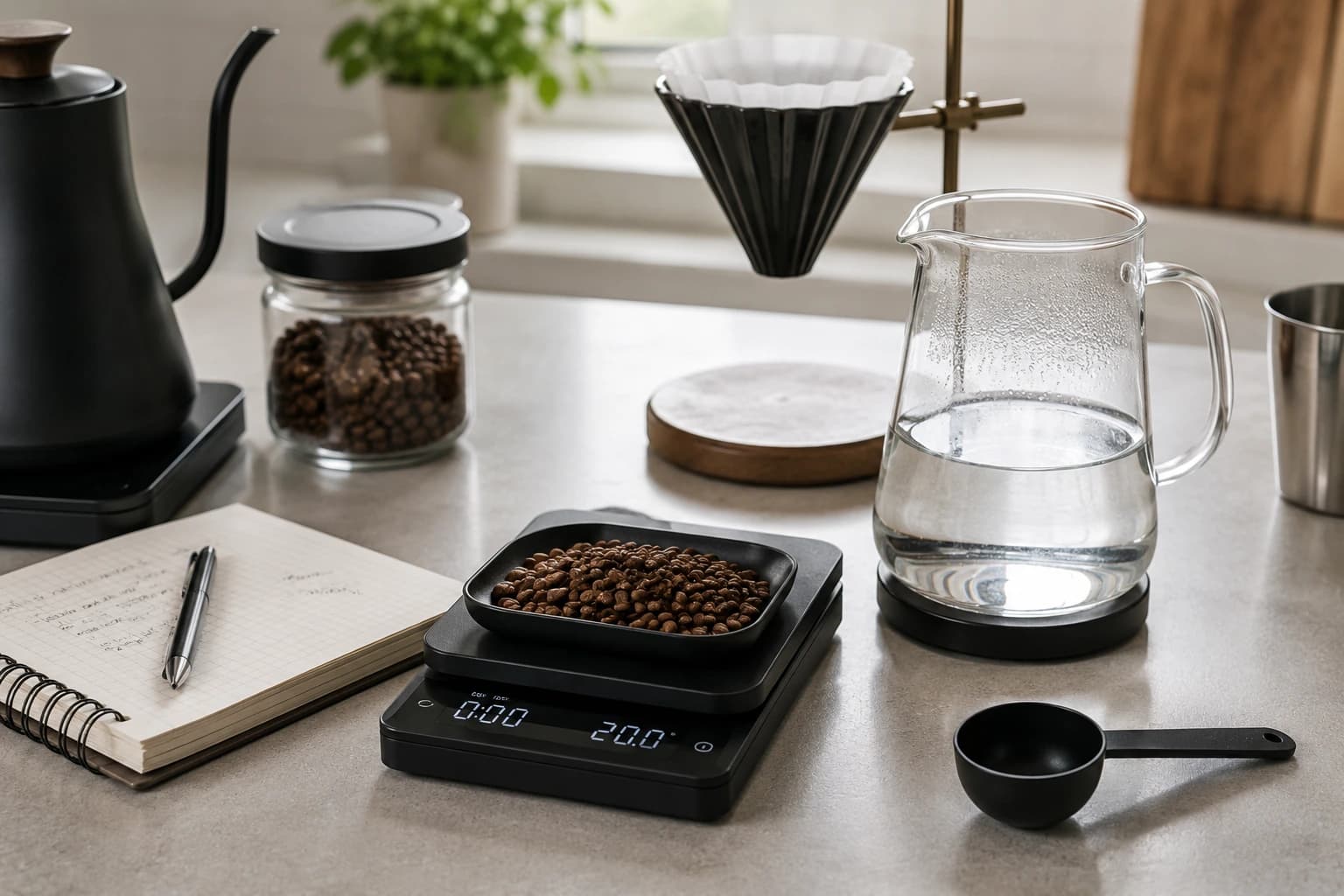
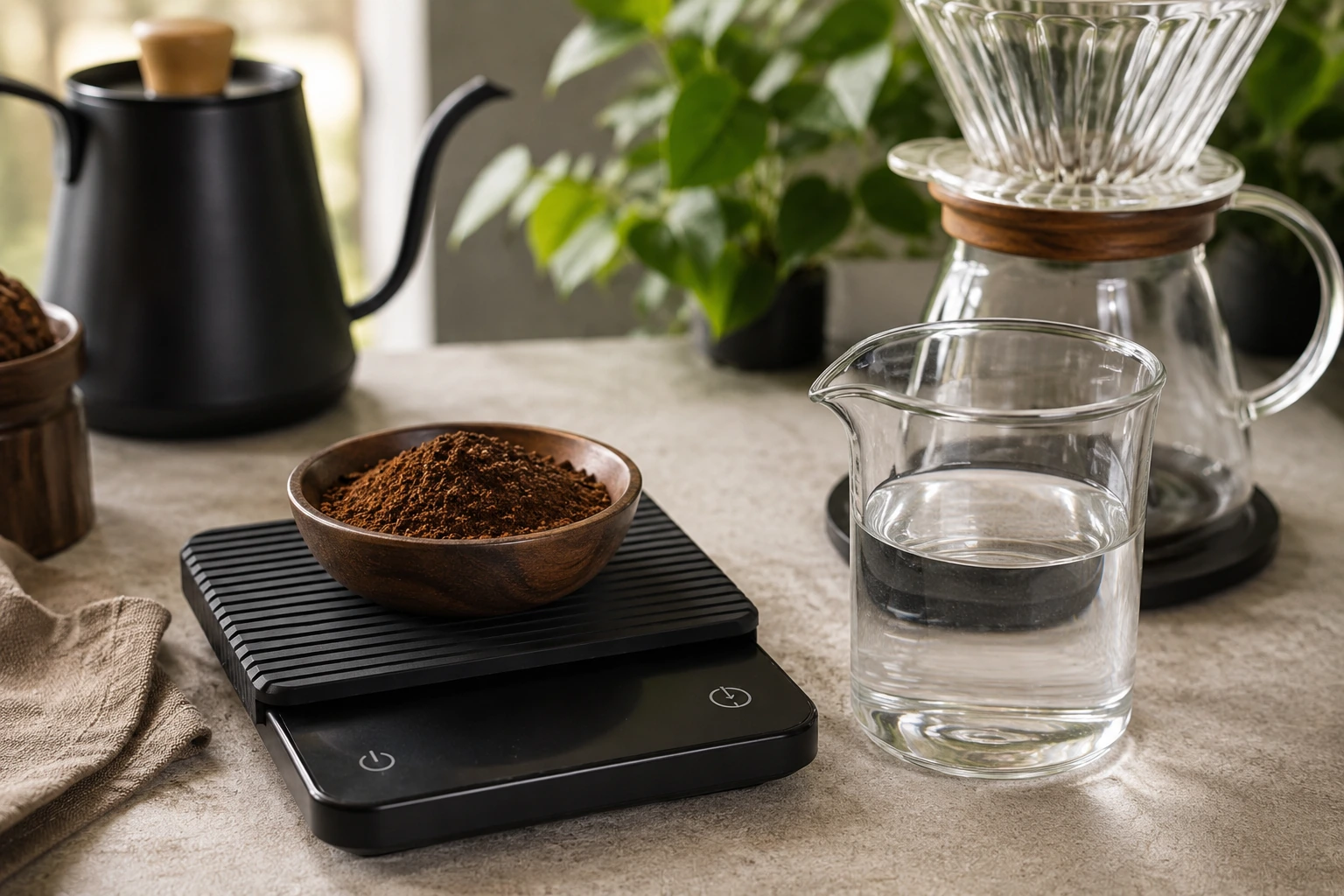
Yes, if you want repeatable coffee. Scoops are acceptable for casual brewing, but they are imprecise because coffee density changes by roast level, grind size and bean shape. Dark roasts are less dense than light roasts, so the same scoop can contain different weights.
A basic digital scale is one of the highest-return coffee tools you can buy. It improves pour over, French press, drip coffee and espresso workflow.
Bottom Line
Use ratios as a starting point, not as dogma.
Start with 1:16 for filter coffee, 1:2 for espresso and 1:6 for cold brew concentrate. Then adjust based on what you taste. If the coffee is balanced but too weak, strengthen the ratio. If the coffee is unpleasant, fix grind size, brew time and water first.
What To Read Next
Use Coffee to Water Ratio Guide for a more focused ratio walkthrough, Coffee Dose Chart for gram-based recipes, Coffee Grind Size Guide for extraction fixes, and Coffee Brewing Methods Guide to match ratios to each method.